







NJ to FL Moving Costs: Budget Your Move
 August 24, 2026
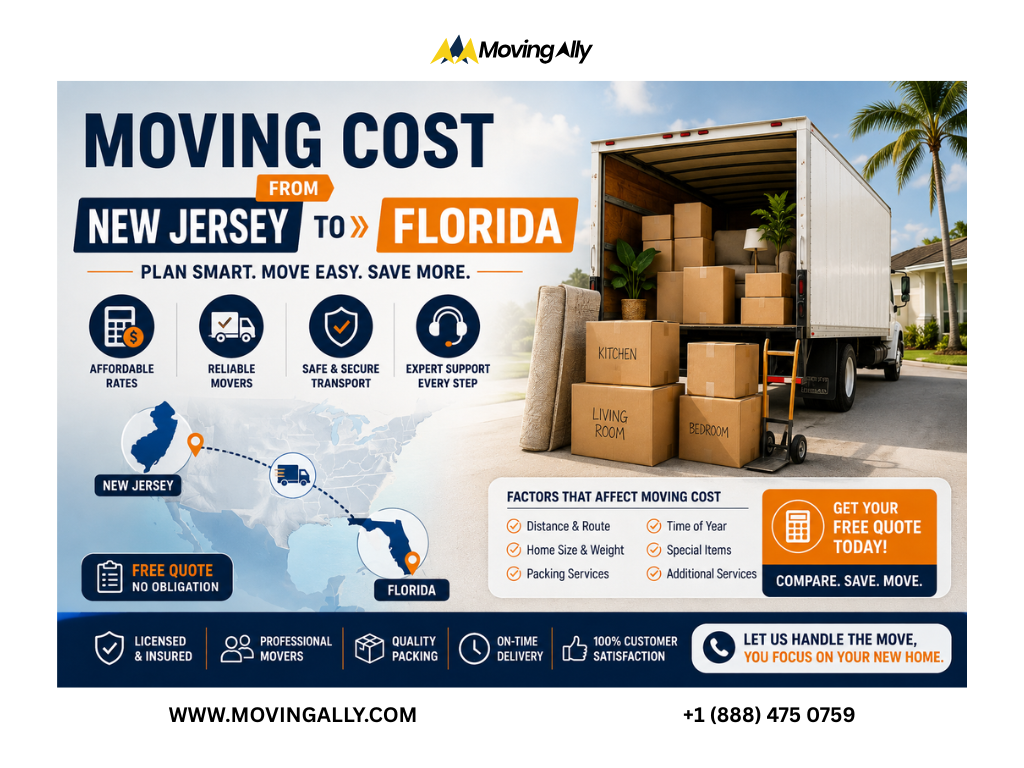
The allure of sunshine, beaches, and a lower cost of living often beckons New Jersey residents towards the vibrant state of Florida. However, embarking on such a significant relocation involves more than just packing your bags. Understanding the potential costs associated with moving from New Jersey to Florida is crucial for effective budgeting and a stress-free transition. This comprehensive guide will break down the key factors influencing your moving expenses and provide actionable tips to help you manage your budget.
Key Factors Influencing NJ to FL Moving Costs
Several variables will directly impact the price tag of your move. Recognizing these will allow you to anticipate expenses more accurately.
Distance and Volume of Belongings
The most significant cost driver is the sheer distance between your New Jersey origin and your Florida destination. This is a long-haul move, and professional movers typically charge based on weight and volume, as well as the mileage. The more stuff you have, the heavier the load, and the further it has to travel, the more it will cost. Consider decluttering ruthlessly before you start packing to reduce the overall volume and weight of your shipment.
Type of Moving Service
Your choice of moving service plays a pivotal role. You have several options, each with its own cost implications:
- Full-Service Movers: These companies handle everything from packing and loading to transportation and unloading. This is the most convenient but also the most expensive option.
- Container Moving: You pack and load a portable moving container, and the company transports it to your new home. This offers a middle ground in terms of cost and convenience.
- Rental Trucks (DIY): Renting a truck and doing all the packing, loading, and driving yourself is the most budget-friendly but also the most labor-intensive.
- Specialized Services: If you have unique items like pianos, art, or large furniture pieces, specialized furniture moving services might be necessary, adding to the overall cost.
Timing of Your Move
Like many services, moving companies often have peak seasons and off-peak seasons. Moving during the summer months (June, July, August) and around major holidays is generally more expensive due to higher demand. If your schedule allows, consider moving during the shoulder seasons (spring or fall) or weekdays to potentially secure better rates.
Packing Materials and Services
The cost of packing supplies can add up. This includes boxes, bubble wrap, packing tape, markers, and specialty materials for fragile items. If you opt for professional packing services, this will significantly increase your moving bill. While packing yourself can save money, it requires time and effort. Even simple items like packing silverware for moving requires care and appropriate materials.
Insurance and Valuation Coverage
Moving companies offer different levels of insurance or valuation coverage for your belongings. Basic coverage is usually included, but it often only covers a small fraction of the value of your items. Purchasing full value protection or third-party moving insurance will provide greater peace of mind but will also add to your total cost. Carefully review the coverage options and choose what best suits your needs and the value of your possessions.
Additional Services
Be aware of potential add-on costs. These can include:
- Shuttle Service: If your moving truck cannot access your home directly, a smaller shuttle truck will be needed, incurring an extra fee.
- Long Carry: If your movers have to carry your items a significant distance from your home to the truck, there might be an additional charge.
- Stairs: Moving heavy items up or down multiple flights of stairs can also result in extra fees.
- Storage: If you need to store your belongings temporarily before moving into your new Florida home, this will be an additional expense.
- Disassembly/Reassembly: Some movers charge extra for taking apart and reassembling furniture.
Estimating Your NJ to FL Moving Costs
Providing an exact figure without knowing the specifics of your move is impossible, but we can offer a general range and outline how to get accurate quotes.
Average Cost Ranges
For a typical three-bedroom home moving from New Jersey to Florida, you can expect the cost to range anywhere from $3,000 to $10,000 or more. This is a broad estimate and can fluctuate significantly based on the factors mentioned above. Smaller apartments or fewer belongings will naturally cost less, while larger homes or more extensive possessions will push the price towards the higher end.
Getting Accurate Quotes
The most reliable way to determine your moving costs is to obtain quotes from multiple reputable moving companies. Here’s how to approach this:
- Research Reputable Movers: Look for companies with good reviews and a proven track record. Be wary of unsolicited offers or companies that pressure you into making a decision quickly. Understanding why reviews matter when choosing a moving company is crucial in this step.
- Request In-Home or Virtual Surveys: A professional mover should conduct an in-home survey or a detailed virtual survey of your belongings. This allows them to accurately assess the volume and weight of your items. A virtual moving survey vs in person can be a convenient option, but ensure it's thorough.
- Get Written Estimates: Always get written estimates from at least three different companies. Compare these estimates side-by-side, paying close attention to what is included and excluded. Don't just go for the cheapest option; consider the reputation and services offered. Learn how to compare moving companies' quotes effectively.
- Beware of Scams: It's vital to be aware of potential moving scams. Research the company's USDOT number and check for complaints with consumer protection agencies. Familiarize yourself with the best ways to avoid moving company scams to protect yourself.
Tips for Saving Money on Your NJ to FL Move
While moving is an expense, there are smart strategies to keep your costs down:
Declutter and Downsize
The less you move, the less it costs. Before getting quotes, go through your belongings with a fine-tooth comb. Sell, donate, or discard items you no longer need or use. This is the most effective way to reduce the weight and volume of your shipment.
Pack Yourself
While professional packing services are convenient, they are a significant expense. Packing your own belongings can save you a considerable amount of money. Start early and organize your packing process to make it less daunting.
Compare Quotes Rigorously
As mentioned earlier, obtaining and comparing multiple quotes is essential. Don't settle for the first estimate you receive. Use your research to negotiate and find the best value.
Consider a Moving Calculator
Some online tools can help you estimate moving costs based on the size of your home and the distance. While not perfectly accurate, a moving packing calculator can provide a helpful starting point for your budgeting.
Be Flexible with Your Moving Dates
If possible, avoid moving during peak seasons or on weekends. Shifting your move to an off-peak time can lead to significant savings.
Understand Moving Myths
There are many misconceptions about moving that can lead to unexpected costs. Educating yourself on moving myths that could cost you more than you think can help you avoid pitfalls.
Consider a Hybrid Approach
You don't have to commit to a fully DIY move or a full-service option. Consider packing yourself and hiring movers only for loading and transportation. This is a good way to balance cost and effort. Explore DIY vs. professional moving services to decide what's best for you.
Frequently Asked Questions
What is the average cost to move a 3-bedroom house from NJ to FL?
The average cost to move a 3-bedroom house from New Jersey to Florida can range from $3,000 to $10,000 or more. This estimate is highly dependent on the exact distance, the volume and weight of your belongings, the services you choose, and the time of year you move.
How much does it cost to hire movers for a long-distance move?
Long-distance moves are generally priced based on the weight of your shipment and the distance. For a move from NJ to FL, expect to pay anywhere from $1,000 for a very small shipment to over $10,000 for a large household. Factors like packing services, insurance, and additional services will also impact the final cost.
Should I get a binding or non-binding estimate?
A binding estimate is a guaranteed price for your move based on the inventory provided. The moving company cannot charge you more than this amount, even if the actual weight or volume is higher. A non-binding estimate is a projection, and the final cost can be higher or lower than the estimate. For long-distance moves, a binding estimate is generally preferred for better cost certainty.
How much should I tip movers for a long-distance move?
Tipping movers is customary for good service. For a long-distance move, a common guideline is to tip each mover $20-$50 per day, or about 10-15% of the total moving cost, to be divided among the crew. Consider tipping more for exceptional service, especially if they handled difficult items or were particularly efficient.
What are the cheapest ways to move from NJ to FL?
The cheapest way to move from NJ to FL is typically by renting a moving truck and doing all the packing, loading, driving, and unloading yourself. Alternatively, using portable moving containers where you pack and load but the company transports can be more cost-effective than full-service movers. Decluttering significantly before the move also drastically reduces costs.