







Where to Buy Moving Boxes: Top Options & Best Prices
 May 26, 2026
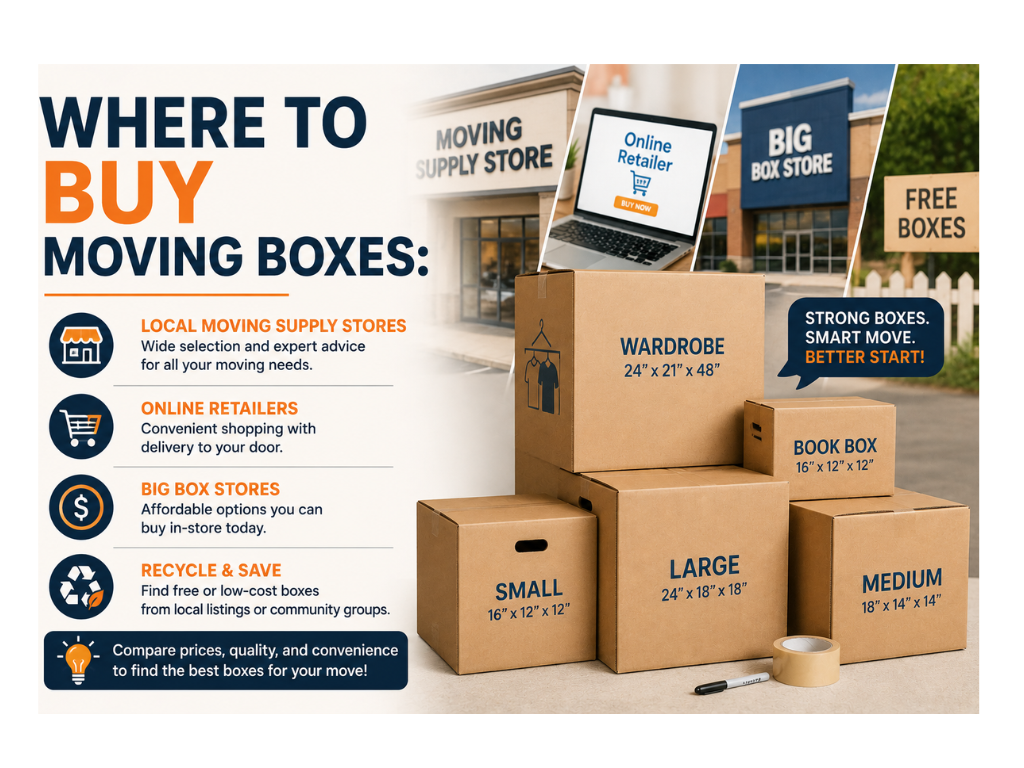
Moving is a significant undertaking, and one of the first things you'll need is a good supply of moving boxes. But with so many options available, figuring out where to buy moving boxes that are both affordable and reliable can feel overwhelming. This guide will walk you through the best places to source moving boxes, considering factors like price, quality, convenience, and environmental impact.
Factors to Consider When Buying Moving Boxes
Before diving into specific retailers, it's important to understand what makes a good moving box. Here are some key considerations:
- Size and Type: Different items require different sized boxes. Small boxes are ideal for heavy items like books, while larger boxes are better for lighter items like clothes and linens. Wardrobe boxes are essential for hanging clothes, and specialty boxes exist for dishes, electronics, and artwork.
- Durability: The strength of the cardboard is crucial. Look for boxes made from sturdy, double-walled cardboard, especially for fragile or heavy items. Cheaper, thinner boxes are more likely to collapse under weight.
- Price: Moving can be expensive, so budget-consciousness is understandable. Compare prices across different retailers, but don't sacrifice quality for the sake of a few cents.
- Convenience: Consider how easy it is to purchase and transport the boxes. Online ordering with delivery is convenient, but you might prefer to pick them up in person if you need them urgently.
- Environmental Impact: Opting for used boxes or those made from recycled materials is a more sustainable choice.
Top Places to Buy Moving Boxes
Here's a breakdown of some of the best places to purchase moving boxes, along with their pros and cons:
1. Big Box Retailers (Home Depot, Lowe's)
Home improvement stores like Home Depot and Lowe's are popular choices for buying moving boxes. They offer a wide variety of sizes and types, often at competitive prices.
Pros:
- Wide selection of sizes and types.
- Generally affordable prices.
- Convenient in-store shopping and online ordering options.
- Readily available, even on short notice.
Cons:
- Quality can vary; some boxes may be thinner than others.
- Prices can fluctuate depending on sales and promotions.
2. Moving Supply Stores (U-Haul, PODS)
Companies like U-Haul and PODS specialize in moving supplies, including boxes, packing materials, and furniture pads. They often offer bundles and kits designed for different sized moves.
Pros:
- Boxes are specifically designed for moving, ensuring durability.
- Wide range of packing supplies available in one place.
- Convenient if you're already renting a truck or storage container from them.
Cons:
- Can be more expensive than big box retailers.
- May require visiting a specific location to purchase.
3. Online Retailers (Amazon, Walmart)
Online retailers like Amazon and Walmart offer a vast selection of moving boxes, often with free shipping for Prime members or orders over a certain amount. This can be a convenient option if you prefer to shop from home.
Pros:
- Wide selection and competitive prices.
- Convenient online ordering with delivery to your doorstep.
- Customer reviews can help you assess the quality of the boxes.
Cons:
- Shipping times can vary, so plan ahead.
- You can't physically inspect the boxes before buying.
4. Local Moving Companies
Many local moving companies also sell moving boxes and packing supplies. This can be a great option because they understand the specific needs of movers and typically stock high-quality products. Plus, they can provide valuable packing tips. If you're looking for ways to streamline your move, this might be a good all-in-one solution.
Pros:
- High-quality boxes designed for professional movers.
- Expert advice and packing tips available.
- Convenient if you're already hiring movers.
Cons:
- Can be more expensive than other options.
- May require contacting the moving company directly.
5. Free Options: Friends, Family, and Online Marketplaces
If you're on a tight budget, consider asking friends, family, or neighbors if they have any spare moving boxes. You can also check online marketplaces like Craigslist or Facebook Marketplace for free or discounted boxes. Local stores may also be willing to give away used boxes.
Pros:
- Free or very low cost.
- Environmentally friendly by reusing boxes.
Cons:
- Boxes may not be in the best condition.
- Can be time-consuming to find and collect.
- Sizes and types may be limited.
Tips for Saving Money on Moving Boxes
Moving can be expensive, but there are ways to save money on moving boxes:
- Buy in bulk: Many retailers offer discounts for buying boxes in bulk.
- Look for sales and promotions: Keep an eye out for sales and promotions, especially around holidays and the end of the month.
- Reuse boxes: If you have boxes from previous moves or purchases, reuse them.
- Use alternative packing materials: Instead of buying packing peanuts or bubble wrap, use old newspapers, towels, or blankets to protect your belongings.
- Get free boxes: Explore free options like asking friends, family, or local businesses.
- Consider renting plastic moving bins: For local moves, renting plastic moving bins can be a cost-effective and eco-friendly alternative to cardboard boxes.
How Many Moving Boxes Do You Need?
Estimating the number of boxes you'll need is crucial to avoid overspending or running out mid-pack. Here's a general guideline based on the size of your home:
- Studio Apartment: 10-15 small boxes, 5-10 medium boxes, and a few large boxes.
- 1-Bedroom Apartment: 15-20 small boxes, 10-15 medium boxes, and a few large boxes.
- 2-Bedroom Apartment/House: 20-30 small boxes, 15-25 medium boxes, and 5-10 large boxes.
- 3-Bedroom House: 30-40 small boxes, 25-35 medium boxes, and 10-15 large boxes.
- 4-Bedroom House or Larger: 40+ small boxes, 35+ medium boxes, and 15+ large boxes.
Remember that these are just estimates. The actual number of boxes you'll need will depend on the amount of belongings you have. It's always better to overestimate slightly than to underestimate.
Planning your move effectively can reduce overall moving costs.
Packing Tips for Moving Boxes
Proper packing is essential to protect your belongings during a move. Here are some tips:
- Use the right size box: Don't overfill large boxes with heavy items.
- Pack heavy items in small boxes: This makes them easier to lift and carry.
- Wrap fragile items carefully: Use bubble wrap, packing peanuts, or newspaper to protect fragile items.
- Label boxes clearly: Label each box with its contents and the room it belongs in. This will make unpacking much easier.
- Reinforce the bottom of boxes: Use packing tape to reinforce the bottom of boxes, especially those containing heavy items.
- Don't leave empty space in boxes: Fill empty space with packing material to prevent items from shifting during transport.
If packing feels overwhelming, remember that professional moving services often include packing assistance.
Frequently Asked Questions
What size moving boxes should I buy?
It depends on what you're packing. Small boxes are best for heavy items like books, medium boxes are good for general household items, and large boxes are suitable for lighter items like clothes and linens. Wardrobe boxes are essential for hanging clothes.
Where can I find free moving boxes?
Ask friends, family, and neighbors if they have any spare boxes. Check online marketplaces like Craigslist or Facebook Marketplace. Local stores may also be willing to give away used boxes.
How can I save money on moving boxes?
Buy in bulk, look for sales and promotions, reuse boxes, use alternative packing materials, and explore free options.
What should I do with my moving boxes after the move?
You can flatten and recycle them, sell them online, or donate them to local charities or organizations.
Are used moving boxes safe to use?
Used boxes can be a great option, but inspect them carefully for damage or pests before using them. Reinforce the bottom with packing tape if necessary.